Mitochondria
- Mitochondria are cellular organelles found in virtually all eukaryotic cells.
- Their main role is the production of energy, in the form of adenosine triphosphate (ATP).
- They were first identified during the nineteenth century, however, a real understanding of how they functioned depended on procedures developed until 1948.
- Mitochondria oxidise food molecules; glucoses and fatty acids to generate ATP.
The two main linked stages that occur in the mitochondria are:
-Citric Cycle
-Oxidative Phosphorylation
- The mitochondria differ structurally from other organelles as they have two membranes rather than one. They are highly specialized and separate four distinctive compartments, the outer membrane, the intermembrane space, inner membrane and matrix.
- Mitochondria regulate the production ATP in a series of controlled oxidisation stages in order to meet the cells energy demand.
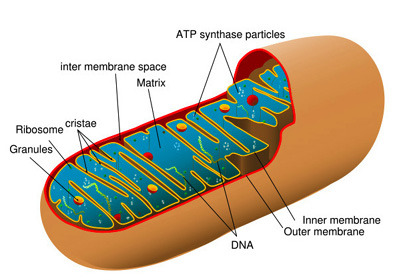
- Regulation of the ATP production requires a controlled series of oxidative steps, in order to meet the cells energy demand.
Image courtesy of commons.wikimedia.org/wiki/File:Animal_mitochondrion_diagram_en.svg
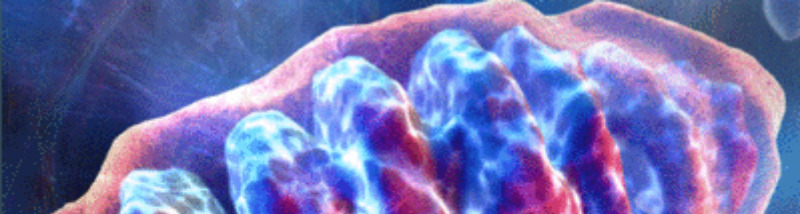
Banner image courtesy of Flickr under creative commons www.flickr.com/photos/biologyflashcards/3439703502/
News
Quick and easy diagnosis for mitochondrial disorders
22/10/2009 00:00
Soon you could be genetically screened for mitochondrial disorders quickly and comprehensively. Research published in BioMed Central's open access journal, Genome Medicine, outlines an innovative clinical diagnostic test for the early identification of a wide range of mitochondrial disorders....
>>
———
Complete mitochondrial genome of 5,000-year-old mummy yields surprise
30/10/2008 00:00
Researchers have revealed the complete mitochondrial genome of one of the world's most celebrated mummies, known as the Tyrolean Iceman or Ötzi. The sequence represents the oldest complete DNA sequence of modern humans' mitochondria, according to the report published online on October 30th in...
>>
———
Gene therapy prevents blindness in an animal model of mitochondrial dysfunction
08/09/2008 00:00
Scientists have created an animal model suitable for testing and validating gene therapies for treatment of a common mitochondrial dysfunction that causes loss of vision. The research, published by Cell Press in the September issue of the American Journal of Human Genetics, describes an innovation...
>>
———
Mitochondrial DNA mutations play significant role in prostate cancer
22/01/2005 00:00
ATLANTA--Mutations in mitochondrial DNA (mtDNA) play an important role in the development of prostate cancer, according to research by scientists at Emory University School of Medicine and the University of California, Irvine. The findings are published online this week in the Proceedings of the...
>>
———
Young people prone to type 2 diabetes exhibit alterations in mitochondrial activity
12/02/2004 00:00
Researchers at Yale have found that decreased activity in muscle mitochondria, the powerhouses of the cell, may be a major factor in the development of type 2 diabetes in young, lean offspring of parents with the disease.
They demonstrated a potential mechanism for the accumulation of fat in muscle...
>>
———